
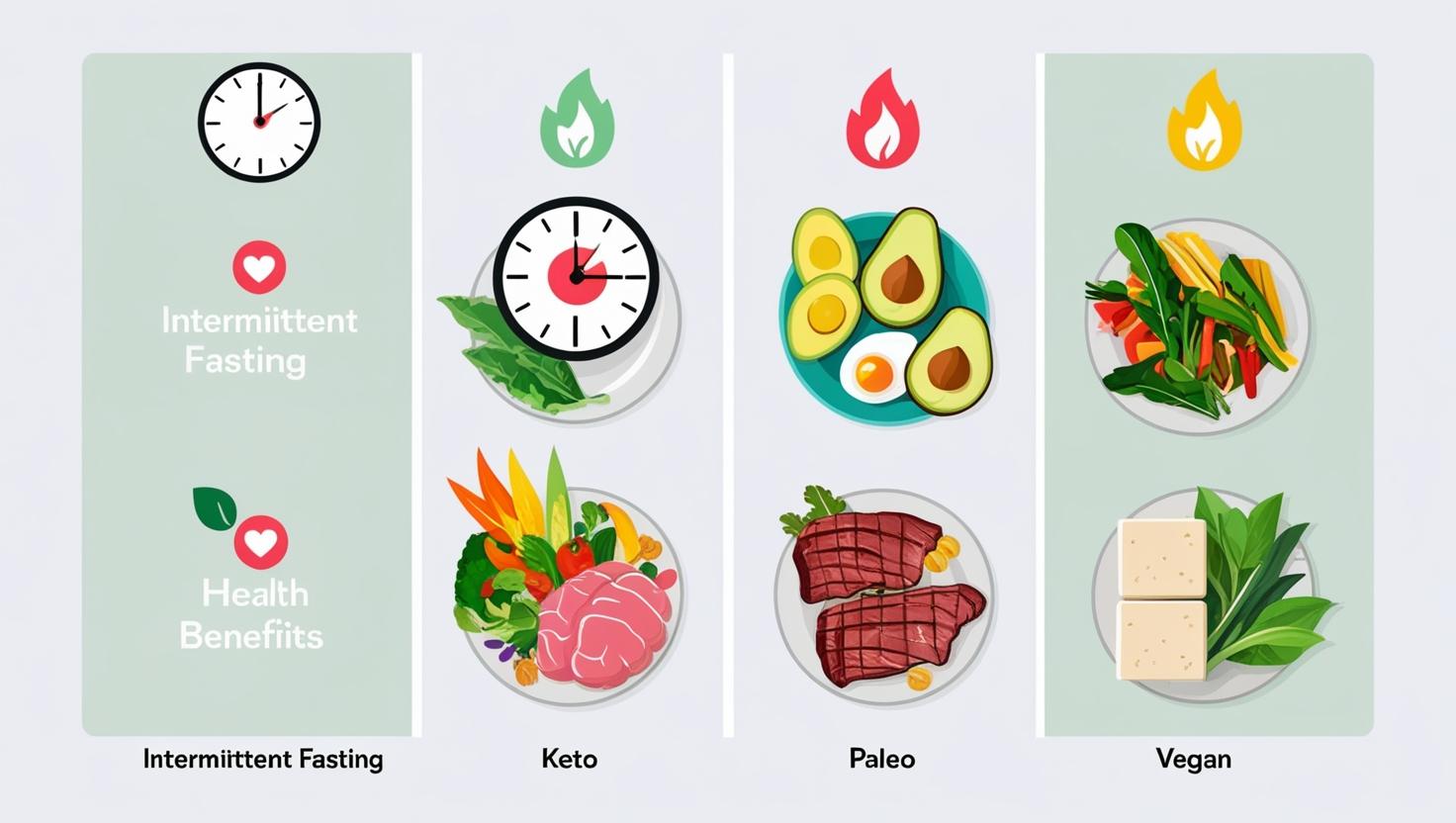
With so many diet trends out there, it’s easy to get overwhelmed. From keto to paleo to veganism, each promises weight loss, better energy, and long-term health. But what about intermittent fasting—the diet that’s not really a diet?
In this article, we’ll explore:
- What intermittent fasting is and how it works
- The basics of keto, paleo, and vegan diets
- A side-by-side comparison
- Science-backed insights to help you choose the right approach for your goals
Let’s dive in.
⏱️ What Is Intermittent Fasting?
Unlike traditional diets that focus on what you eat, intermittent fasting (IF) focuses on when you eat.
The most popular version is the 16:8 method—you fast for 16 hours and eat within an 8-hour window. Other variations include:
- 5:2 method – Eat normally for 5 days, restrict calories on 2 days
- 24-hour fasts once or twice a week
The goal? Give your body time to rest, repair, and burn fat more efficiently.
🔬 How Does Intermittent Fasting Work?
Here’s what happens when you fast:
- Your body first uses stored glucose for energy
- After that, it starts burning fat
- This leads to weight loss, better insulin sensitivity, and improved cell repair
- It also activates autophagy—a natural detox process where your body removes damaged cells
Studies show that intermittent fasting:
- Lowers inflammation
- Supports heart and brain health
- May even promote longevity
🥑 The Big Three: Keto, Paleo, and Vegan Diets
1. Keto Diet
A high-fat, low-carb diet that puts your body into ketosis—a state where it burns fat instead of carbs for energy.
Pros: Fast weight loss, reduced hunger
Cons: Hard to sustain, risk of nutrient deficiencies
2. Paleo Diet
Based on the presumed diet of our ancestors, this plan focuses on whole foods, eliminating grains, dairy, and processed items.
Pros: Clean eating, no processed foods
Cons: Can feel restrictive, may lack calcium and fiber
3. Vegan Diet
A plant-based diet that avoids all animal products. Rich in nutrients and fiber but needs careful planning.
Pros: Supports heart health, eco-friendly, high in fiber
Cons: Needs supplementation for B12, iron, omega-3s
🔁 How Intermittent Fasting Compares
The beauty of intermittent fasting is its flexibility. Unlike keto, paleo, or vegan diets, IF doesn’t restrict what you eat—it simply structures when you eat.
In fact, you can combine intermittent fasting with:
- A keto plan for faster fat burning
- A paleo diet for cleaner nutrition
- A vegan approach to support plant-based living and weight loss
🧪 What Does the Science Say?
According to recent studies:
- Intermittent fasting can be as effective as calorie restriction for weight loss
- It may reduce the risk of chronic diseases like diabetes and heart disease
- Fasting stimulates autophagy, a detox process linked to anti-aging effects
✅ Pros and Cons: A Quick Comparison
| Approach | Pros | Cons |
|---|---|---|
| Intermittent Fasting | Flexible, improves fat burning, supports longevity | Can cause hunger/fatigue, not ideal for everyone |
| Keto | Quick weight loss, suppresses appetite | Tough to maintain, may cause deficiencies |
| Paleo | Focuses on whole, natural foods | Restrictive, can lack grains and dairy |
| Vegan | Great for heart health, fiber-rich, plant-based | Requires careful planning for protein, B12, iron |
🧘 Which One Should You Choose?
It depends on your lifestyle, goals, and what feels sustainable.
- Want flexibility and fat loss? 👉 Intermittent fasting
- Need rapid results and structure? 👉 Keto
- Prefer clean eating without counting calories? 👉 Paleo
- Committed to a plant-based lifestyle? 👉 Vegan
Whichever you choose, remember: consistency beats perfection.
💬 Final Thoughts
There’s no one-size-fits-all approach to diet. Whether it’s intermittent fasting, keto, paleo, or vegan—the best plan is the one that works for your body and lifestyle.
🌟 Experiment. Listen to your body. And make small, sustainable changes.
👇 Comment below: Which approach are you trying—or thinking about? We’d love to hear your experience!